深圳市泽任科技有限公司
 第2年


Aclar®33是一种主要由三氟氯乙烯(CTFE)组成的共聚物薄膜,这个型号的薄膜*适于显微学和生物组织学。这种三氟氯乙烯聚合物特殊的分子结构使其具有优异的光学特性、热稳定性、出色的防潮性和化学稳定性
服务
产品完善度:
更新时间:2026/10/7 9:30:48关注度:623
关键词标签:电镜用ACLAR膜10501-8
支付方式:
ACLAR® Film provides an oxygen barrier when flat embedding specimens for electron microscopy and light microscopy,
it separates easily from epoxy and is chemically inert
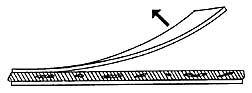
 Epoxy embedments sandwiched between ACLAR® sheets
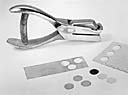 Disc Punches are available in four sizes: 5/16" (7.9mm) 3/8" (9.5mm) 7/16 (11.1mm) 1/2" (12.7mm)
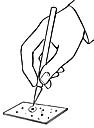
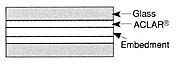 Press between glass plates 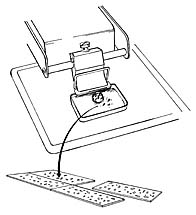 Fresh material is cut on a vibratory slicer, treated with HRP and placed on ACLAR® cut into a slide shape - observe under LM - if OK, process for TEM on the slide. | The 1968 paper1 by E. B. Masurovsky and R.P. Bunge was the first to describe and clearly demonstrate the useful chemical and physical properties of ACLAR® for both tissue culture and electron microscopic purposes. It was first used in the space program and its properties were found to be interesting for biomedical research (personal communication, Dr. E. Masurovsky). Subsequent work by others developed ACLAR® applications; attention is brought to that done by Mawe, et al 2, and the comprehensive ACLAR® study by Kingsley and Cole3. ACLAR® overcomes a number of problems regarding the processing of tissue culture cells, epoxy embedments, sectioning and observations because of its chemical inertness, non-stick property, glass clarity, flexibility and smooth surface. It may be cut with scissors or blades and does not damage microtomy knives. It is unsurpassed in moisture barrier protection, transparent to UV and is plasticizer and stabilizer free. It is nonflammable, nonaging and has a low dielectric constant and dissipation. It is high in dielectric strength. ACLAR® can be sterilized. Features of ACLAR® Film:
ACLAR® is offered in sheet form, 8 x 12.5" (203 x 318mm) with 7.8 mil (0.2mm) thickness.
References, ACLAR® Film 1. Masurovsky EB, Bunge RP: Fluoroplastic coverslips for long-term nerve tissue culture. Stain Technology, 43, 3, 161-165 (1968) 2. Mawe GM, Bresnahan JC, Beattie, MS: Ultrastructure of HRP-labelled neurons: a comparison of two sensitive techniques. Brain Research Bulletin, 10, 551 (1983) 3. Kingsley RE, Cole NL: Preparation of cultured mammalian cells for transmission and scanning electron microscopy using Aclar film. J of Electron Microscopy Technique, 10, 77-85 (1988)
ACLAR® Embedding FilmPhysical Data |
| Density | 2.12 |
| Thickness | 7.8 mil (0.198mm) |
| Clarity | Clear |
| Water Absorption | nil |
| Water Vapor Transmission Rate @ 100°F (37.7°C) / 100% RH | 0.003gm / 100in² / day (0.047gm / m² / day) |
| Dimensional Stability, 10 min @ 300°F (149°C) | <2% |
| Dimensional Change, 10 min. @ 300°F (149°C) | < 2% |
| Thermal Conductivity | 4.7 x 10⁻⁴ cal-cm/cm²sec °C |
| Crystalline Melting Point | 395.6 - 399.2°F (202 - 204°C) |
| Flammability | Nonflammable |
| Acetone | No effect |
| 100% Ethyl alcohol | No effect |
| Liquid Nitrogen | Remains flexible |
| Osmium Tetroxide | No effect |
| Propylene Oxide | No effect |
| Butyl Alcohol | None |
| Carbon Tetrachloride | Slightly flexible |
| 1,2-Dichloroethane | None |
| Ethyl Acetate | Very flexible |
| Ethyl Ether | Very flexible |
| Ethylene Oxide | Very flexible |
| Formic Acid | None |
| Gasoline | None |
| All Acids (HCl, H2SO4..) | None |
| Methanol | None |
| Toluene | Slightly flexible |
| Plastisolve | None |
推荐产品


至尊版地址:www.ze-ren.com
公司网址:https://www.app17.com/c150283
手机商铺:https://wap.app17.com/c150283
手机网站:m.ze-ren.com
Dumont、Fine Science Tools、Rubis、ideal-tek、 EMS、1-material、 Genesee Scientific、Techni-Tools、Gilder Grids、AIMS、Sipel、Si-Ma..

 在线咨询5分钟应答